Most pet owners know they should bring their dog or cat in for a yearly checkup. But ask them what actually happens during that visit, and you will get a lot of blank stares. “They check them over, I guess. Give them their shots?”
There is actually a lot more going on than that. A full pet wellness checkup is one of the most valuable things you can do for your animal, and understanding what it involves helps you get the most out of every visit. When you know what your vet is looking for and why, you become a more engaged partner in your pet’s health rather than just a bystander in the exam room.
This guide walks through exactly what a comprehensive pet wellness exam looks like at Family Veterinary Care of Oakdale, step by step, so you walk in prepared and walk out with confidence.
Why Annual Wellness Exams Matter More Than You Think
Pets age much faster than people do. A single year in a dog or cat’s life is equivalent to several human years, depending on their species and size. That means a lot can change between visits, including things you might not be able to see or feel at home.
The goal of a wellness exam is not just to give vaccines. It is a full-body health assessment that gives your vet a chance to catch problems before they become serious ones. Dental disease, early kidney changes, heart murmurs, weight gain, skin issues, and even early signs of cancer can all be identified during a routine checkup when nothing seems obviously wrong.
The earlier a problem is found, the better the outcome in almost every case. That is the real value of staying consistent with your pet’s annual pet checkup.
Before the Visit: What You Should Prepare
Getting ready for your pet’s wellness exam does not require much, but a little preparation goes a long way.
Bring a fresh stool sample. Intestinal parasites are common in pets, and many of them do not cause obvious symptoms. A fecal test can catch roundworms, hookworms, whipworms, Giardia, and coccidia before they cause serious damage. Collect a small sample within 12 hours of the appointment and bring it in a sealed bag or container.
Write down any changes you’ve noticed. Even small things count. Is your cat drinking more water than usual? Has your dog been scratching at one ear? Any limping, changes in appetite, shifts in energy level, changes in bathroom habits? These observations give your vet valuable context that you cannot get from an exam alone.
Bring your pet’s vaccination records if they are new to the practice. This prevents unnecessary duplication and helps your vet build a complete health history from the start.
Bring a calm energy if you can. Pets pick up on our anxiety. If you are relaxed and matter-of-fact about the visit, your pet is more likely to be cooperative. At Family Veterinary Care of Oakdale, we work hard to make every visit feel as low-stress as possible, but your energy helps more than you might realize.
Step-by-Step: What Happens During a Full Pet Wellness Checkup
Step 1: Check-In and History Review
The wellness exam actually begins before your vet walks into the room. When you arrive, a veterinary technician will greet you and your pet, get your pet settled, and take an initial history. They will ask about your pet’s diet, activity level, any changes you have noticed, any medications or supplements your pet is currently taking, and whether you have any specific concerns.
This is not small talk. This is the foundation of the exam. The information gathered here shapes what your vet will look for and which questions they will follow up on.
Your pet’s weight will be measured and compared to previous visits. Weight changes, in either direction, can be an important clinical indicator. A dog that has lost two pounds since last year without any dietary change may have an underlying issue worth investigating.
Step 2: Physical Examination, Head to Tail
Once your vet comes in, they will greet you and your pet and then begin a methodical, head-to-tail physical examination. This is the heart of the wellness visit. Here is what they are actually evaluating:
Eyes: Clarity, discharge, redness, cloudiness, and symmetry. Early signs of cataracts, glaucoma, or dry eye can often be spotted here.
Ears: Your vet will look into both ear canals for wax buildup, redness, discharge, polyps, or signs of infection. Ear infections are one of the most common reasons pets come in, and many are recurring. Catching a mild infection at a wellness exam prevents a painful emergency visit later.
Nose and Mouth: The nose is checked for discharge or asymmetry. Then comes the oral exam, which is one of the most important and most commonly overlooked parts. Your vet will examine the teeth for tartar buildup, gingivitis, broken or loose teeth, and abnormal gum tissue. Studies consistently show that by age three, most dogs and cats have some degree of dental disease. Most owners have no idea because pets rarely stop eating even when their mouths hurt.
Throat and Lymph Nodes: The lymph nodes under the jaw, around the neck, and behind the ears are gently palpated. Enlarged lymph nodes can signal infection, inflammation, or occasionally cancer.
Skin and Coat: Your vet will run their hands through your pet’s coat, checking for parasites (fleas, ticks), hair loss patterns, lumps, cysts, skin thickening, scaling, or abnormal pigmentation. The condition of the coat also tells a story about overall health and nutrition.
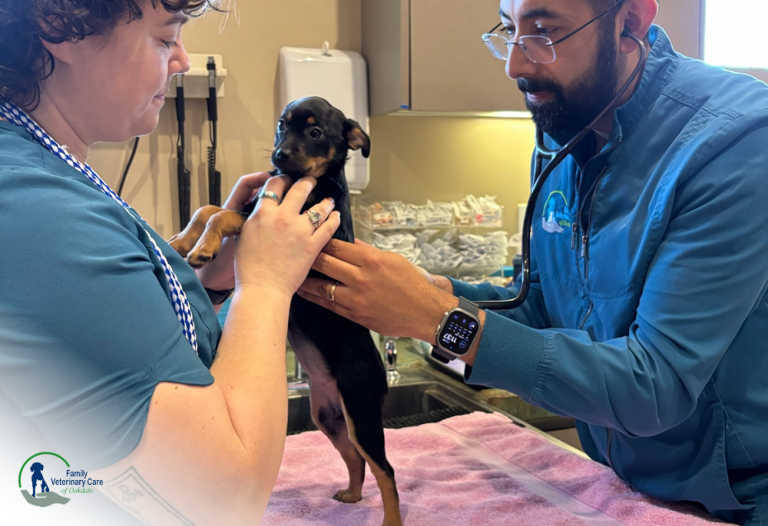
Chest and Heart: Your vet will use a stethoscope to listen carefully to your pet’s heart. They are listening for murmurs (abnormal whooshing sounds), irregular rhythms, or changes from previous exams. Heart murmurs are graded on a scale of 1 to 6, and tracking progression over time is important for proactively managing heart disease.
Lungs: The lungs are also auscultated for clear, even breathing sounds. Crackles, wheezes, or muffled sounds can indicate infection, fluid, or structural issues.
Abdomen: Your vet will palpate the abdomen with both hands to assess the size and texture of the liver, spleen, kidneys, bladder, and intestines. Abnormal size, firmness, or the presence of masses can be detected this way. Abdominal palpation is also how we detect bladder stones, kidney enlargement, or a distended intestine.
Musculoskeletal System: Joints, muscles, and range of motion are evaluated. Your vet will watch how your pet moves, check for muscle wasting or asymmetry, and feel for crepitus (grinding) or swelling in the joints. This is particularly important for large-breed dogs and senior pets.
Nervous System: A quick neurological screening is included in the exam. Reflexes, gait, posture, and responsiveness are all observed. Any stumbling, head tilting, or altered mentation gets flagged for further investigation.
Reproductive Organs (if intact): For unspayed or unneutered pets, the reproductive organs are also evaluated for abnormalities.
Step 3: Vaccinations
Based on your pet’s lifestyle, age, risk factors, and vaccination history, your vet will recommend an appropriate vaccine schedule. Not every pet needs every vaccine every year. Your vet will tailor recommendations to your specific animal.
Core vaccines for dogs typically include rabies and the DHPP combination (distemper, hepatitis, parainfluenza, parvovirus). Bordetella (kennel cough) is recommended for dogs who regularly interact with other dogs. Leptospirosis may be recommended depending on exposure risk in the Oakdale and Riverbank area.
Core vaccines for cats typically include rabies and FVRCP (feline viral rhinotracheitis, calicivirus, panleukopenia). FeLV (feline leukemia) is recommended for cats who go outdoors or are exposed to other cats.
Your vet will explain why each vaccine is being recommended, not just hand you a list. You should always feel free to ask questions.
Step 4: Parasite Prevention Discussion and Testing
Your vet will review your pet’s current parasite prevention protocol to ensure it is appropriate and up to date. This includes fleas, ticks, heartworm, and intestinal parasites.
For dogs, a heartworm test is typically run annually, even if they are on prevention. This is not because the prevention doesn’t work. It is because no medication is 100% effective if a dose is missed or vomited, and catching heartworm infection early makes treatment much easier.
Your fecal sample collected at the beginning of the visit is processed during the exam, and results are typically available by the end of the appointment.
Step 5: Bloodwork and Diagnostics (If Recommended)
Not every wellness visit requires bloodwork, but for adult dogs and cats over six or seven, routine bloodwork is often recommended, even when everything looks normal on the outside.
A basic wellness panel typically includes a complete blood count (CBC), which evaluates red and white blood cells and platelets, and a chemistry panel, which assesses organ function, including the liver, kidneys, and pancreas. Thyroid levels are often checked in cats over eight, since hyperthyroidism is extremely common in older felines and very treatable when caught early.
Urinalysis is another helpful tool that can reveal kidney stress, urinary tract infections, and diabetes-related changes before they become obvious.
Your vet will talk you through any results that fall outside of normal range and explain what, if anything, needs to happen next.
Step 6: Nutrition and Weight Discussion
Weight management is one of the most impactful things pet owners can do for their animals’ long-term health. Overweight pets are at significantly higher risk for diabetes, joint disease, heart disease, and a shortened lifespan. Yet most owners do not realize their pet is overweight because the weight gain occurs gradually.
During a wellness exam, your vet will give your pet a body condition score and have an honest, judgment-free conversation with you about their diet, portion sizes, and activity level. They may recommend a specific food, a feeding schedule adjustment, or a therapeutic diet if your pet has specific health needs.
This is also a good time to ask about treats, table scraps, dental chews, and supplements. Small daily habits add up over time.
Step 7: Your Questions and the Care Plan
Before the visit wraps up, your vet will address any concerns you brought in and answer any questions you have. This is your time. No question is too small. If something has been nagging at you since the last visit, this is the moment to bring it up.
You will leave with a written summary of the discussion, any recommended follow-ups, your pet’s updated vaccination records, and a clear understanding of what to watch for before the next visit.
Dog Wellness Exam vs. Cat Wellness Exam: What’s Different?
The general structure of the exam is similar for dogs and cats, but there are a few differences worth knowing.
Cats are notoriously private about pain and illness. They are particularly prone to hiding symptoms of dental disease, hyperthyroidism, kidney disease, and hypertension. Your vet may spend extra time on thyroid palpation and blood pressure screening for older cats.
Cats also tend to experience more stress at the vet than dogs do, which can affect their exam findings. Blood pressure, heart rate, and even blood glucose levels can spike during a vet visit. Experienced cat-friendly veterinarians know how to interpret these readings in context and use low-stress handling techniques to keep cats as calm as possible.
For dogs, orthopedic screening, weight management, and parasite prevention tend to receive particular attention, given how active most dogs are and how common joint issues become with age.
How Often Does My Pet Really Need a Wellness Exam?
Puppies and kittens need a series of visits in their first year for vaccines, parasite control, and developmental monitoring. These visits are typically scheduled every 3 to 4 weeks until about 16 weeks of age.
Adult pets (ages 1 to 7) generally need a wellness exam once a year.
Senior pets (over 7 for most dogs, over 10 for cats) benefit from twice-yearly exams. A lot can change in six months for an older animal, and more frequent monitoring allows for earlier intervention.
Pet Wellness Exam in Oakdale, CA: Book Yours Today
If it has been more than a year since your pet had a full checkup, or if you are new to the area and looking for a vet clinic near Riverbank or the surrounding 209 region, we would love to meet you and your pet.
Family Veterinary Care of Oakdale is recognized as the best veterinary in Oakdale, Riverbank, and Escalon. Our team is genuinely passionate about preventive care and ensuring you leave every visit feeling good about the decisions you are making for your animal.
Frequently Asked Questions About Pet Wellness Exams
How long does a pet wellness checkup usually take?
A comprehensive wellness exam typically takes between 30 and 60 minutes, depending on the age of your pet, how many vaccines are due, whether bloodwork is drawn, and how many questions you have. We do not rush visits. Your time with the vet is yours.
My pet seems perfectly healthy. Do they really need an annual exam?
Yes, and this is actually the best time to have one. Wellness exams are designed to catch things before symptoms appear. By the time you notice something is wrong, the problem has often been developing for weeks or months. Preventive care is almost always less expensive and less difficult than treating a problem that has had time to progress.
What if my pet is really anxious at the vet?
Please tell us when you call to schedule. We have strategies for anxious pets, from scheduling at quieter times to pre-visit calming protocols to a team trained in low-stress handling. Some pets do well with a pre-visit anxiety medication prescribed by your vet. We want the experience to be as positive as possible for both of you.
Is a dog wellness exam different from a cat wellness exam?
The structure is similar, but the priorities differ based on species, age, and lifestyle. Cats get particular attention for dental disease, thyroid function, and kidney health as they age. Dogs get close attention for orthopedic health, heartworm testing, and dental disease. Your vet tailors the exam to your specific pet.
Does my indoor cat still need annual checkups?
Absolutely. Indoor cats are still at risk for dental disease, obesity, diabetes, hyperthyroidism, kidney disease, and other conditions that have nothing to do with outdoor exposure. Annual exams help catch these issues early, when they are easiest to manage.
How do I know which vaccines my pet actually needs?
Your vet will go over this with you during the visit based on your pet’s lifestyle, age, prior vaccine history, and local disease risk. Not every pet needs every vaccine, and your vet should always explain the reasoning behind each vaccine, not just hand you a bill.
What should I bring to the wellness exam?
A fresh fecal sample (collected within 12 hours), any previous records if you are new to the practice, a list of current medications and supplements, and a list of any concerns or changes you have noticed. That is all you need.
Is there a vet near Riverbank, CA that does full wellness exams?
Yes. Family Veterinary Care of Oakdale is conveniently located at 389 W F St, Oakdale, CA 95361, and serves families from Riverbank, Escalon, and the entire 209 area. You can reach us at (209) 847-9077 or book online through our portal.
Schedule Your Pet’s Wellness Checkup
Preventive care is the foundation of a long, healthy life for your dog or cat. A full wellness exam once a year is one of the simplest and most impactful investments you can make in your pet’s wellbeing.
At Family Veterinary Care of Oakdale, every wellness visit is thorough, unhurried, and built around you and your pet. We take the time to explain what we are seeing, answer every question, and make sure you leave feeling like a well-informed partner in your pet’s care.
Book your pet’s wellness exam today or call us at (209) 847-9077. We are open Monday through Saturday and would love to see your pet.



Leave A Comment